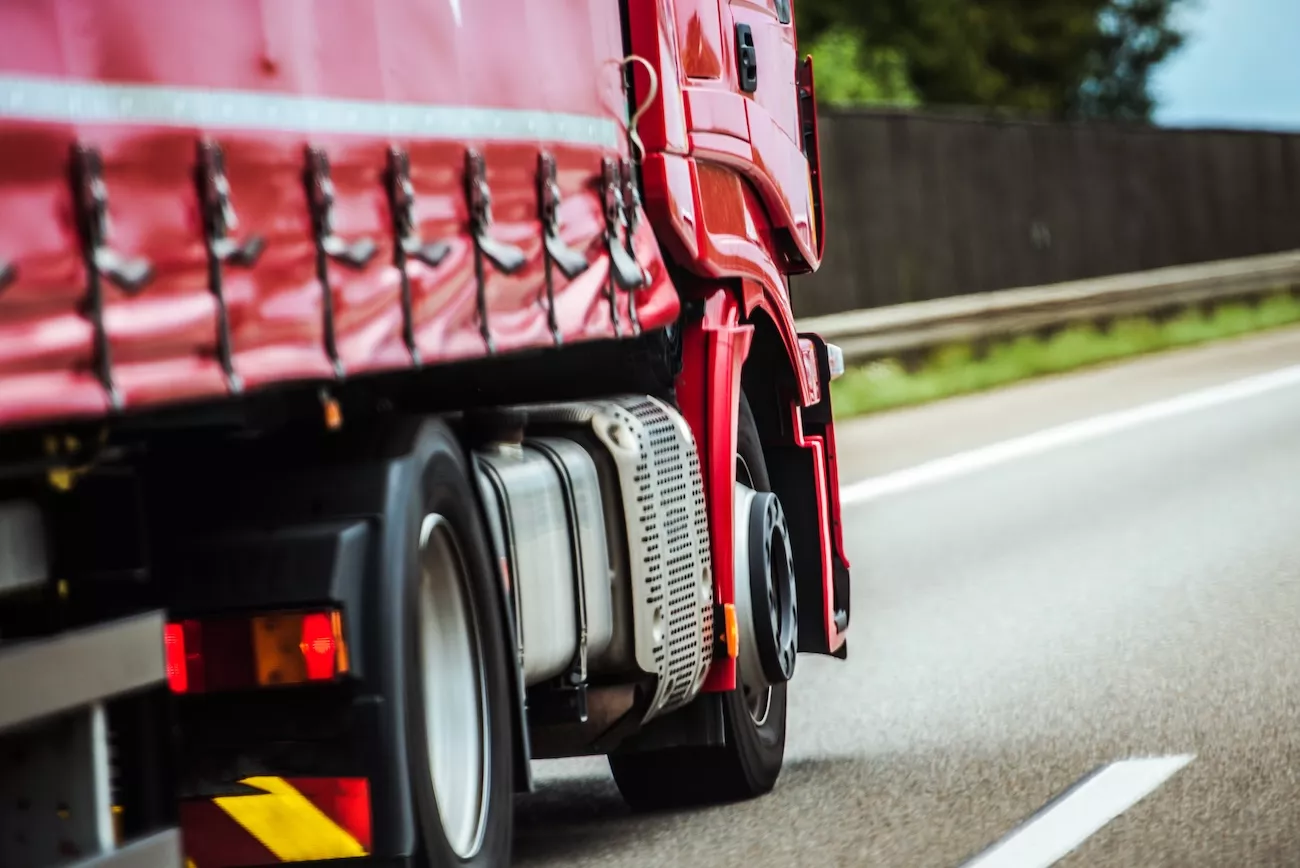
A same-day temperature-controlled courier collects chilled, frozen or controlled-ambient goods and drives them directly to their destination within hours, holding them at the right temperature from the moment they are loaded to the moment they are signed for. For most businesses, it is not an everyday service. It is the call you make when a vaccine delivery cannot wait until tomorrow, when a refrigerated trailer breaks down with a full load of fresh stock, or when a pathology sample needs to reach the lab before the end of the day.
At AMW Couriers, urgent temperature-sensitive work is part of what we do every day. As a national same-day temperature-controlled courier with more than 2,000 GPS-tracked vehicles and 60-minute collection anywhere in the UK, we move time-critical consignments for businesses in healthcare, food and drink, manufacturing and life sciences. This guide explains how the service works, when you need it and what to look for when every minute and every degree counts.
A same-day temperature-controlled courier is a dedicated delivery service that collects temperature-sensitive goods within hours of booking and transports them directly, in a refrigerated or climate-controlled vehicle, so they arrive the same day within a specified temperature range. The goods stay in one vehicle, with one driver, from collection to delivery.
That last point matters more than it first appears. Keeping goods in range is not only about what happens while the engine is running. The cold chain covers loading, transit and unloading, and every handover is a moment when temperature can drift. A dedicated same-day service removes most of those moments entirely.
Many carriers offer chilled or frozen delivery on a next-day basis. These networks are efficient for planned, regular volumes, but they work by consolidation: goods are collected, taken to a hub, sorted onto trunking vehicles overnight and delivered the following day alongside other customers' freight. Each transfer adds time on a loading dock and another opportunity for the temperature to move.
A same-day service works differently. A pre-cooled vehicle is allocated to your consignment, collects it and drives it direct, with no hub, no overnight sort and no shared load unless you choose one. For urgent goods, or goods with a narrow tolerance, that direct route is what makes cold chain logistics dependable rather than hopeful. It is the same principle behind our wider same day courier service, applied to goods that cannot be left to chance.
Urgent temperature-controlled work tends to fall into three groups. The goods differ, but the pressure is the same: the consignment has a limited window, and missing it carries a real cost.
Healthcare is where same-day temperature control matters most. Vaccines, insulin and many biologic medicines must be kept between 2°C and 8°C, and some lose effectiveness if they stray outside that range for even a short period. Pathology samples, blood products and clinical trial materials often need to reach a laboratory within a set time to remain viable, while temperature-sensitive medical devices and diagnostic kits regularly need to move between hospitals, clinics and pharmacies at short notice.
In these situations, a medical courier is not simply moving a parcel. It is protecting a patient appointment, a test result or a trial timeline. Whether you need a pharmaceutical courier for a single urgent consignment or a reliable partner for recurring time-critical runs, our medical courier services give healthcare providers, pharmacies and life science businesses direct, monitored transport when timings are tight.
In food and drink, urgent chilled and frozen deliveries usually follow something going wrong. A refrigerated vehicle breaks down mid-route. A trunking run is missed. A retailer runs short of a fast-selling line, or an event caterer needs extra stock before service. Producers also send chilled samples to buyers and trade shows, where arriving in perfect condition is the whole point.
Having a frozen or chilled courier you can call on turns these problems into minor delays rather than lost stock and damaged customer relationships. Our food and drink logistics work is built around exactly this kind of recovery, keeping perishable goods delivery on track when the planned route has failed.
Research laboratories, manufacturers and chemical suppliers also move temperature-sensitive goods urgently, from reagents and cultures to adhesives and specialist materials. Some of these shipments travel on dry ice, which is classed as a dangerous good for road transport. In those cases, your courier must manage both the temperature requirement and the regulatory one, which is where an ADR courier for dry ice shipments becomes essential.
Before you book, you need to know the range your goods require. Most temperature-controlled delivery falls into one of three bands.
Frozen goods are typically held at -18°C or below. This covers frozen food, ice cream and some biological materials, where any thawing can make the product unsafe or unsaleable.
Chilled goods sit above freezing but well below room temperature. Medicines that need refrigeration are usually kept between 2°C and 8°C, while fresh food such as meat, dairy and prepared meals is generally held between 0°C and 5°C.
Controlled ambient covers goods that must stay between roughly 15°C and 25°C, protected from both heat and cold. Many solid-dose medicines, cosmetics and certain chemicals fall into this band, and it becomes especially important in a cold snap or a heatwave.
Where a consignment spans more than one band, dual-compartment vehicles can carry chilled and frozen goods together at separate set points. For a fuller explanation of each category, read our guide to choosing between frozen, chilled and ambient transport.
From the first phone call to the signed delivery, an urgent temperature-controlled job follows five stages. Knowing what happens at each one helps you brief your courier properly and spot any weak links before they cost you.
Booking takes a few minutes, but the information you give at this stage shapes the whole job. Your courier needs to know what the goods are, the temperature range they require, their size and weight, the collection and delivery addresses and any time windows at either end. Mention handling instructions, paperwork or site access restrictions too. The clearer the brief, the faster the right vehicle can be allocated.
Before collection, the vehicle's load space is brought to the required set point. Your goods are then loaded into a space that is already at temperature, rather than into a warm van that has to catch up. It is a small step that makes a significant difference, particularly for chilled medicines with a narrow tolerance.
AMW Couriers aims to collect same-day consignments within 60 minutes of booking, anywhere in the UK. Loading is kept brief and organised, so doors stay open for as little time as possible, and goods packed in their own insulated containers are positioned to keep air circulating around them. Where a job demands an even firmer time commitment, our priority delivery service adds a further layer of certainty.
Once loaded, the vehicle drives straight to its destination. There are no depot stops and no transfers to another carrier. Throughout the journey, GPS tracking shows exactly where the consignment is, and the conditions inside the load space are monitored so that any change can be acted on immediately rather than discovered on arrival.
At the destination, goods are unloaded promptly and handed to a named recipient, and you receive a signed proof of delivery. It is worth agreeing at the booking stage how temperature readings for the journey will be shared with you, as that record can support your own audit trail, whether that is a pharmacy's receiving check or a food business's HACCP documentation.
Need chilled or frozen goods moved today? AMW Couriers collects within 60 minutes, anywhere in the UK. Get a free quote or call our team on 01384 470 351.
Speed alone does not protect temperature-sensitive goods. A dependable service also needs the right equipment, a disciplined process and a clear plan for when conditions change.
Small consignments are sometimes sent in validated cool boxes or insulated packaging with cool packs, and for short journeys this can work well. NHS guidance on transporting medicines, for example, explains how cool boxes should be prepared and monitored for 2°C to 8°C products. Passive packaging has its limits, though. It holds temperature for a finite time, is affected by the weather outside, and it cannot correct itself if a delay occurs.
A refrigerated courier vehicle actively maintains the set point for as long as the journey takes. For longer distances, larger loads, very hot or very cold weather, or goods with a tight tolerance, an actively refrigerated van is usually the safer choice. Many shippers combine the two, placing insulated packaging inside a temperature-controlled vehicle for an extra margin of protection.
A temperature excursion is any period when goods move outside their required range. On a monitored vehicle, it should be identified as it happens rather than at the destination. The driver can respond straight away by checking door seals, adjusting the refrigeration unit or arranging support, and the deviation is recorded with its time and duration.
That record matters. For medicines, the recipient uses it to decide whether the product is still fit for use, often with guidance from the manufacturer. For food, it feeds into the business's own safety checks. A courier who can tell you exactly what happened, and for how long, gives you the facts to make the right decision instead of a guess.
Every time goods change hands, they spend time on a dock or in a loading bay, and responsibility becomes harder to trace. AMW Couriers operates a single fleet with no third-party depot transfers, so your consignment stays with one vehicle and one driver from collection to delivery. The result is fewer exposure points, one accountable team and a clear, unbroken chain of custody across loading, transit and unloading.
Temperature-controlled transport sits within a wider regulatory picture, and the rules depend on what you are moving. As the shipper, it pays to confirm how your courier supports each of the following before the vehicle is booked.
Medicines in the UK are subject to Good Distribution Practice (GDP), overseen by the Medicines and Healthcare products Regulatory Agency (MHRA). GDP covers how medicines are stored and transported, including temperature control, monitoring and record-keeping, so pharmaceutical consignments should travel in a way that supports your own GDP obligations.
Food businesses operate under food hygiene law and HACCP principles, with guidance from the Food Standards Agency. Chilled and frozen foods must be kept at safe temperatures throughout distribution, and your records should be able to show that they were.
Diagnostic specimens such as pathology samples are usually packaged to UN3373 standards, while consignments using dry ice, classified as UN1845, fall under ADR rules for the carriage of dangerous goods by road. If your shipment involves either, tell your courier at the booking stage so the right vehicle, packaging and paperwork are in place from the start.
When something is urgent, it is tempting to book the first courier who answers the phone. A few questions asked at the outset will tell you whether they can genuinely protect your goods.
Start with response time: how quickly can they collect, and is that commitment national or limited to certain areas? Next, ask whether they run their own vehicles or subcontract the work, because subcontracting usually means less control over equipment, drivers and handovers. Confirm the temperature ranges they can hold, whether dual-temperature vehicles are available and how temperature readings are recorded and shared with you.
It is also worth checking whether the service runs around the clock, what goods-in-transit insurance is in place and whether they can cover a journey from one end of the country to the other at short notice. A courier with national scale and its own fleet will answer all of these with confidence. For a more detailed checklist, read our guide to choosing a temperature-controlled courier.
There is no single price for urgent temperature-controlled delivery, because every job is quoted on its own requirements. Distance is the biggest factor, as same-day work is usually priced by mileage, and vehicle size follows closely, from a small refrigerated van for a few boxes to a larger vehicle for pallet loads.
The temperature range plays its part too. Frozen work and dual-temperature loads demand more from the vehicle than controlled ambient, and pre-cooling time is built into the quote. Out-of-hours collections, weekend work and waiting time at either end can also affect the final figure.
The simplest way to keep costs under control is to give a complete brief when you book, so the right vehicle is allocated the first time. For a broader view of pricing, see our guide to how much a same day courier costs in the UK.
When temperature-sensitive goods have to move today, you need a partner with the scale to respond and the discipline to protect every consignment. AMW Couriers is one of the UK's leading independent courier and freight operators, trusted by businesses across healthcare, food and drink, manufacturing and life sciences, with more than 2,000 GPS-tracked vehicles ready to move chilled, frozen and controlled-ambient goods.
We collect within 60 minutes, anywhere in the UK, and deliver direct on our own fleet with no third-party depot transfers. From our base in Stourbridge, at the heart of the M5, M6 and M42 network, we reach every corner of the country, any time of day. Whether you need an emergency temperature-controlled courier for a single urgent box or a full load of perishable stock, our team is ready to make it happen.
Book your same-day temperature-controlled courier today. Get a free quote online or call 01384 470 351 to speak to our team.
Yes. A same-day temperature-controlled courier allocates a dedicated, pre-cooled vehicle to your consignment, collects it within hours of booking and drives it directly to the destination. AMW Couriers collects within 60 minutes anywhere in the UK, so most urgent chilled, frozen or ambient consignments arrive the same day.
AMW Couriers aims to collect within 60 minutes of booking, anywhere in the UK. With more than 2,000 GPS-tracked vehicles on the road, an emergency temperature-controlled courier is usually close by, whether the request comes during the working day, overnight or at the weekend.
Most refrigerated medicines, including vaccines and insulin, must be transported between 2°C and 8°C. Many solid-dose medicines require controlled ambient conditions of 15°C to 25°C, while frozen products should be kept at the temperature set by the manufacturer. Always check the product's storage instructions before booking.
Yes. Refrigerated medication should travel with a temperature-monitored courier rather than standard post, which cannot guarantee the required range. Businesses moving medicines should also make sure the transport arrangement supports their Good Distribution Practice obligations, including temperature monitoring and accurate records of the journey.
A refrigerated courier keeps goods cold, usually chilled or frozen. A temperature-controlled courier is the broader term, covering any service that holds goods within a set range, including controlled ambient conditions that protect against both heat and cold. In practice, many refrigerated vehicles can do both.
Yes, if the courier uses a dual-compartment vehicle. These vans have separate sections held at different set points, so chilled and frozen goods can travel together without either drifting out of range. Mention mixed loads when you book so the right vehicle is allocated from the outset.
Yes. Every AMW Couriers vehicle is GPS-tracked, so our team can tell you exactly where your consignment is from collection to delivery. Conditions inside the load space are monitored throughout the journey, and you receive a signed proof of delivery once the goods have been handed over.
If goods move outside their required range, monitoring should flag the excursion as it happens so the driver can act immediately. The time and duration of the deviation are recorded, and the recipient uses that record to decide whether the goods remain usable, often with guidance from the manufacturer.
Your business and domestic needs are our priority.
Take a look at the different services we offer and the sectors we support.
A run down of all things that have happened, are happening and all things that are going to happen. With the announcement of new services, events and offers. News is where you'll find it all so make sure you keep checking back!
QUOTE
If you fill out the form with as much detail as possible then we'll get back to you as soon as possible with a accurate quote to deliver your goods.
If you have any questions or you feel the item you're sending will need a special service then please get in touch.